What is SEO?
Search Engine Optimization (SEO) is the process of enhancing a website to improve its organic visibility on search engines. This involves various techniques that focus on optimizing the content, structure, and overall user experience of a website. The goal of SEO is to rank higher in search engine results pages (SERPs) for relevant keywords without paying for placement.
Key Components of SEO:
- Keyword Research: Identifying the right keywords that potential customers are searching for is crucial. This involves understanding search intent and choosing keywords that align with the content.
- On-Page Optimization: This includes optimizing title tags, meta descriptions, headings, and content to make it more relevant to the selected keywords. It also involves ensuring the website is user-friendly and mobile-responsive.
- Technical SEO: This aspect focuses on the backend of the website, such as site speed, mobile-friendliness, and secure connections (HTTPS). A technically sound website is crucial for search engines to crawl and index pages effectively.
- Link Building: Acquiring backlinks from reputable sources can significantly enhance a website’s authority and improve its rankings.
What is SEM?
Search Engine Marketing (SEM), on the other hand, refers to the practice of using paid advertising to increase visibility on search engines. This includes pay-per-click (PPC) advertising, where businesses pay for their ads to appear at the top of search results for specific keywords. SEM is often associated with Google Ads, but it can also include other platforms like Bing Ads.
Key Components of SEM:
- Paid Search Ads: These are the ads that appear at the top or bottom of search results. Advertisers bid on keywords, and the highest bidders typically gain the best ad placements.
- Ad Targeting: SEM allows for precise targeting based on various factors such as location, demographics, and user behavior. This targeting ensures that ads reach the most relevant audience.
- Performance Measurement: With SEM, advertisers can track the performance of their ads in real time. This includes metrics like click-through rates (CTR), conversion rates, and return on ad spend (ROAS).
- Budget Control: SEM provides flexibility in budgeting. Businesses can set daily or monthly budgets and adjust bids based on performance, making it easier to manage marketing expenditures.
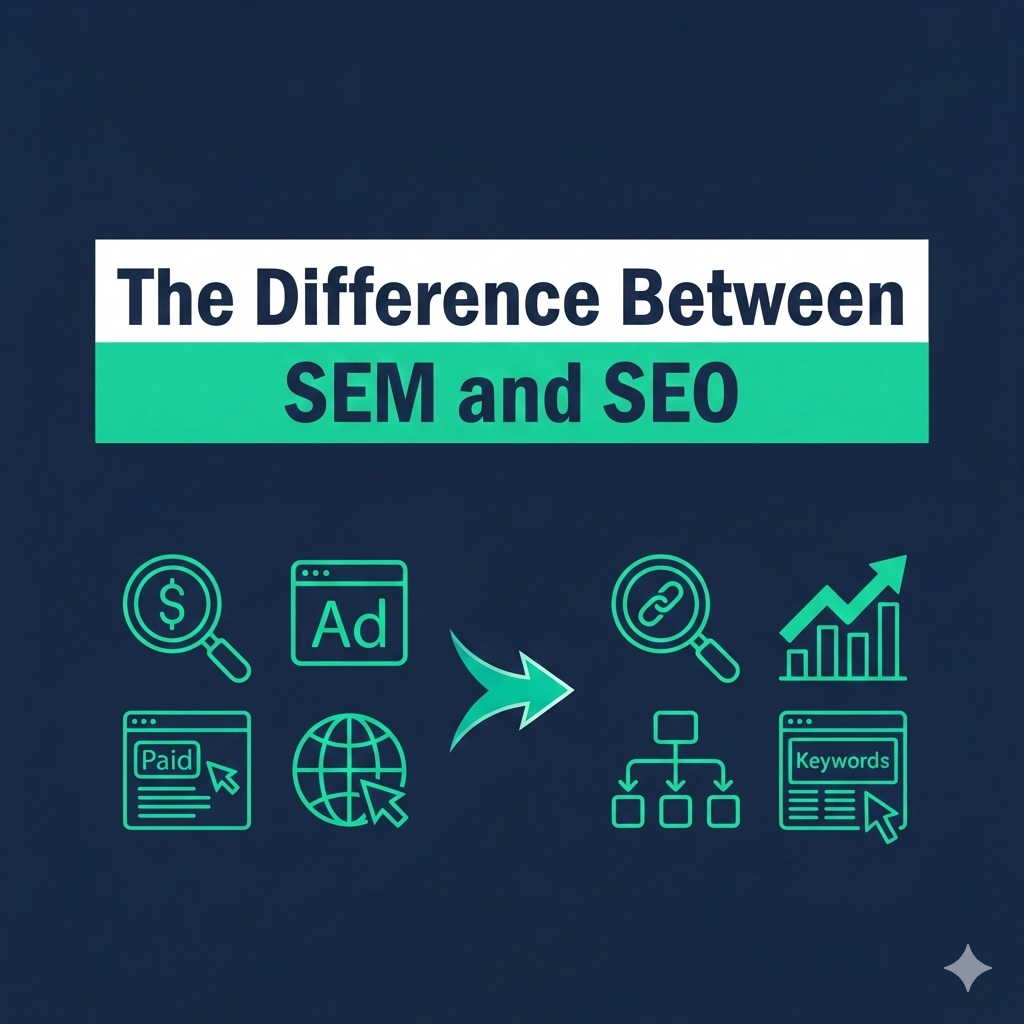
Key Differences Between SEM and SEO
- Cost: SEO is often considered a long-term investment with no direct costs for organic rankings, while SEM requires a budget for paid advertising. However, SEO can also involve costs related to content creation and optimization.
- Timeframe: SEO is a gradual process that can take months to yield results, whereas SEM can generate immediate visibility and traffic as soon as campaigns are launched.
- Sustainability: Organic rankings achieved through SEO can provide long-term benefits, as they continue to drive traffic without ongoing costs. In contrast, SEM stops delivering traffic as soon as the budget runs out.
- User Intent: SEO typically targets users looking for information or solutions organically, while SEM often captures users who are ready to make a purchase or take immediate action due to the nature of paid ads.
Conclusion
In summary, while both SEM and SEO are essential for a comprehensive digital marketing strategy, they serve different purposes and require different approaches. SEO focuses on organic growth and long-term visibility, while SEM provides immediate results through paid advertising. By understanding the differences between these two strategies, businesses can effectively leverage both to enhance their online presence and achieve their marketing goals. Balancing SEO and SEM can lead to a more robust digital marketing strategy, ultimately driving traffic and conversions.